It’s Not About NFTs: Why Gamers Didn’t Like Ubisoft Quartz


December 7, Ubisoft announced the launch of Ubisoft Quartz, a platform for minting and trading in-game objects in the form of NFTs. At the time of writing, there are around 7k users on the platform and 38,000 dislikes vs 1,000 likes under the YouTube announcement. The company ended up removing the video from their page. So, why didn’t gamers like the idea?
We’ve read Ubisoft Quartz’s FAQ, watched through some videos of popular gaming bloggers and journalists, and it looks like we’ve found the answer.
Ubisoft Quartz in a Nutshell
The company will use Quartz to release collections of in-game skins. For now, the platform is only available for Ghost Recon Breakpoint, for which they can get three items for free:
- new colour coating for M4A1 Tactical | Wolves;
- helmet Wolf Enhanced Helmet;
- trousers Wolf Enhanced Pants.
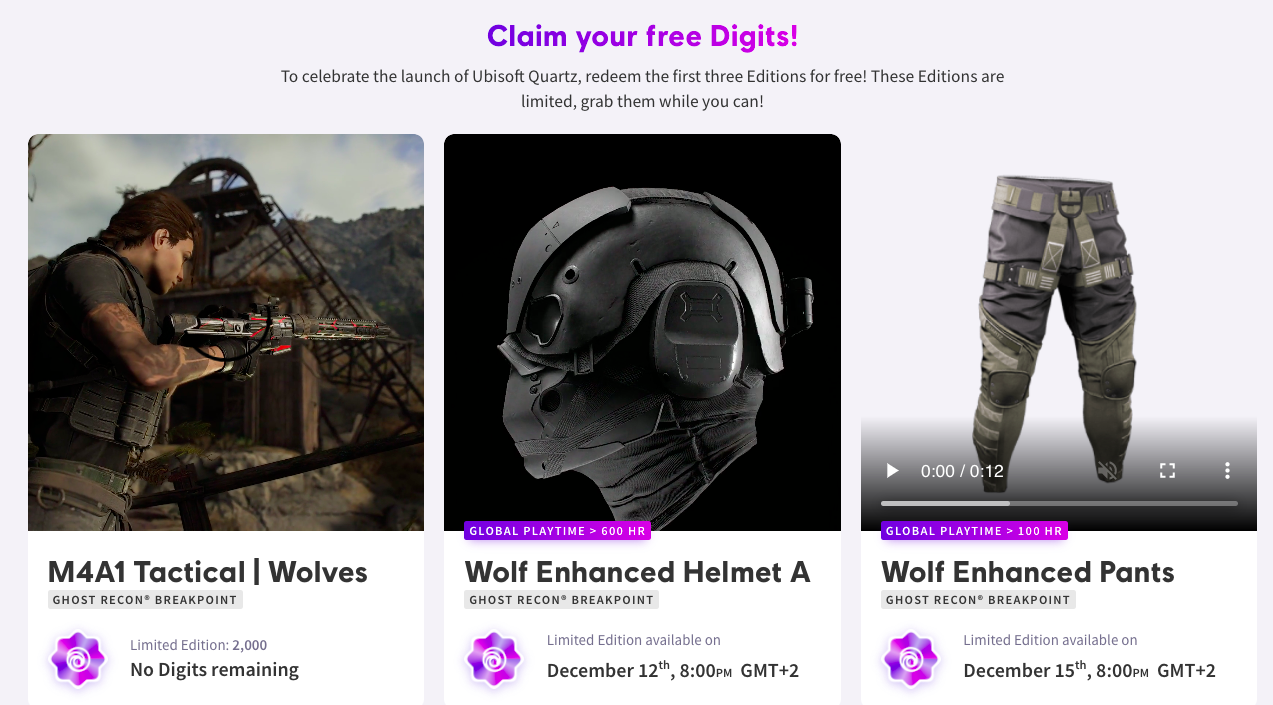
M4A1 is no longer available, and getting the trousers and the helmet requires 100 and 600 hours of gameplay respectively.
Ubisoft Quartz NFTs are called Digits and use the Tezos blockchain. According to Ubisoft, the number of Digits in future collections will vary between a few tokens and thousands thereof.
Digits’ metadata stores the description and a demo video for the in-game item, as well as the history of ownership. The company uses its own decentralised storage Aleph that supports metadata updates.
A player can get only one unique Digit. Thus, one can’t buy Wolf Enhanced Helmet on the marketplace if he or she already owns one. Digits will be traded at Rarible and objkt.com and be shown in NFT-supporting Tezos wallets. If Ubisoft decides to close down Quartz or Ghost Recon Breakpoint, the users will keep the NFTs.
Details are available in FAQ Ubisoft. If you are beyond North America or Western Europe, use VPN.
Why Gamers Disliked Ubisoft Quartz
It’s because of Ubisoft’s public image. Professional reviews of Quartz are 90% negative statements about Ubisoft as a company and 10% thoughts like “NFT is a nice technology but Quartz is far from good.”
Ubisoft has been aggressively monetising its games for years now. Unless you are very into grinding, you will have to play with a rusty sword of 10 damage for a long time, or just pay actual money to get a 100 damage sword right away. It works the same for nearly every in-game item, including clothes and resources required to complete quests. Players just feel that Quartz might be an attempt to monetise on NFTs.
Secondly, Ghost Recon Breakpoint is arguably a bad choice for such a project. Gamers rarely hate skin stores in multiplayer games where you can show off in front of other players. The examples of CS:GO, DotA 2, League of Legends, Overwatch, PUBG, Fortnite and their likes always feature very vivid and expressive skins, while those available for Breakpoint are too realistic and dull. Nothing to show off, in a word.
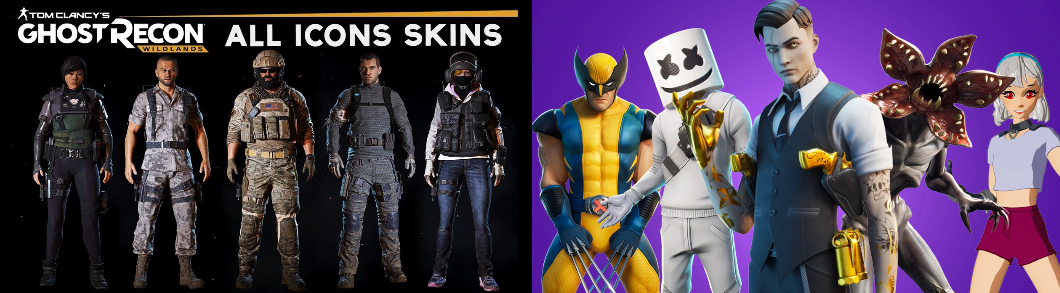
Finally, Quartz offers an unusual economic model with limited collections. No other multiplayer game limits the number of skins, so their players always have an option to buy anything they want.
What’s Wrong With the Digital Economy in Quartz
Aside from distributing cosmetic units, Quartz also implies there is an option for trading on third-party marketplaces. External markets are already available for CS:GO, DotA 2, Team Fortress 2 and other games thanks to Valve. This, the CS:GO market allows any player to have a chance to get a case for free, while also offering to buy a key to open a case with a random collectable item. Finally, winning a skin for a popular weapon is less likely than winning one for an unpopular one.
Therefore, gamers spend money to open cases and thus create face value for the object: winning a rare knife will require buying dozens of keys. Its face value will be higher than that of a gun available in 50% of cases. If the player got an unwanted skin, they can sell it at Steam Marketplace and buy another item or a game.
League of Legends and other games without a Steam integration work without marketplaces. The player just directly buys whatever they want and cannot sell or transfer those items to anyone.
For now, however, Ubisoft Quartz uses something in between: players will claim or buy Digits directly and will be able to sell them. Without the element of randomity, though, a fan of sniper rifles will never get an unnecessary shotgun just to sell it to a fan of close combat. The limited nature of collections means that Digits will run out fast causing those who missed them to buy what they want on the secondary market.
How Ubisoft Could Save Quartz
It would have been wiser to introduce Quartz linked to Rainbow Six: Siege. It’s a tactical counterpart to CS:GO with cosmetic items and cases but without an in-built market for skins. The fans of Rainbow Six have been asking Ubisoft to add a market since 2017.
Another option would be to remove or at least increase the limits of collections. If anyone were able to buy an NFT for a reasonable price, some gamers’ grievances about Quartz would fade away.
The third way would be to use NFT and blockchain to their fullest potential, say, by adding interoperability. In Ghost Recon, Rainbow Six, and Watch Dogs, players use the same modern armour vests and weapons, so Ubisoft could enable the transfer of NFT objects between the games to make Digits more useful for players.
Conclusion
Gamers don’t hate NFTs in games. They don’t like the way Ubisoft attempts to introduce them: not for the players, in a wrong game, and in a controversial way. But even like that, it’s a milestone for Tezos and the mass adoption of crypto.
As for Ubisoft, it’s very likely that it’s only testing Quartz with Ghost Recon Breakpoint, and Digits can appear in their other games later on. Who knows, other major game developers could even follow their suit.
Subscribe and never miss updates from the world of Tezos:
- Telegram channel
- Twitter in Russian and Ukrainian
- Twitter in English
- YouTube channel
- hub at ForkLog


